In distribution, getting a product into the market is only part of the challenge. The bigger challenge is making sure that the product reaches the right customer, at the right location, at the right time, while the business has enough visibility to understand what is happening along the way.
This is what makes the last mile one of the most important parts of the distribution channel.
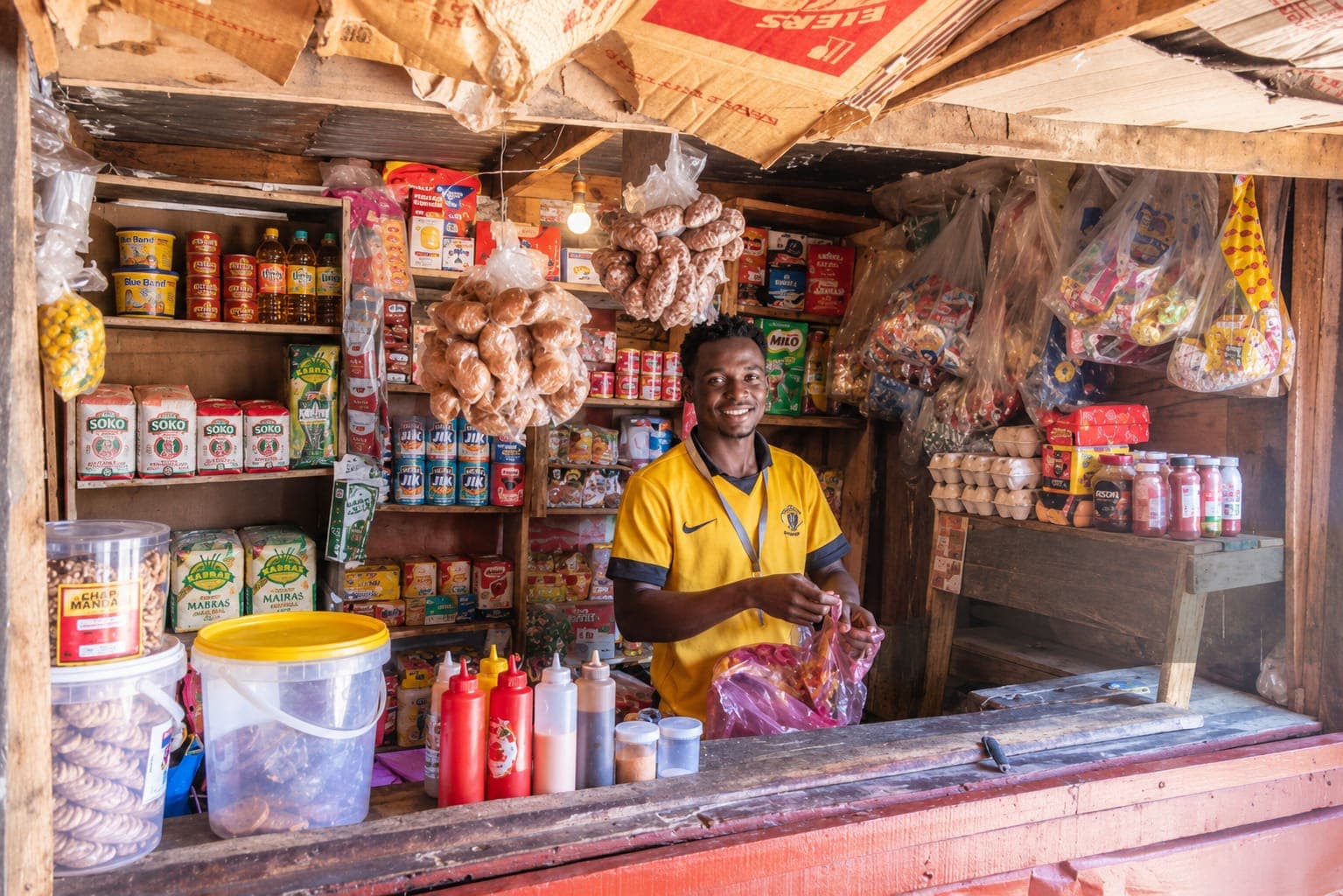
For manufacturers, distributors and wholesalers, the last mile is where products move from distribution networks into the hands of retailers, restaurants, hotels, shops and ultimately consumers. It is also where businesses begin to encounter some of their biggest operational challenges. Customer information can become fragmented, sales activities can be difficult to track, inventory can be disconnected from demand, and delivery operations can become increasingly difficult to coordinate as the customer base grows.
Kenya’s growing commercial activity makes this challenge even more important. According to the Kenya National Bureau of Statistics, wholesale and retail trade grew by 3.6 percent in 2025, while transportation and storage grew by 3.7 percent. Accommodation and food services recorded an even stronger growth rate of 15.6 percent during the same period.
These sectors depend heavily on efficient distribution.
The question is no longer simply how businesses can move more products. The question is how they can build a distribution system that gives them visibility from the moment a customer creates demand to the moment that demand is fulfilled.
The Last Mile Is Where Demand Becomes Visible
A distributor can have a large warehouse, multiple vehicles and a strong sales team and still struggle to understand what is happening in the market.
Consider a sales representative visiting shops across Nairobi, Kiambu or another growing market. During the day, the representative may visit dozens of outlets, speak with customers, identify products that are running out of stock and receive new orders.
Traditionally, much of this information may be recorded manually or communicated through phone calls, WhatsApp messages, spreadsheets or paper documents.
The business eventually receives the information, but not necessarily when it is most useful.
This creates a visibility gap.
Management may know how much was sold yesterday, but may not know which customers were visited today.
The warehouse may know how much stock is available, but may not know where demand is increasing.
The driver may know which orders need to be delivered, but management may not have a complete view of the delivery operation.
The customer may know exactly what they need, but the business may not have a structured way of capturing that demand.
The result is a distribution network where different parts of the operation are working, but they are not necessarily working from the same information.
Kenya Is Already Digitally Ready for a Connected Distribution Model
The opportunity to change this is growing because Kenya has developed a strong digital and mobile ecosystem.
The Central Bank of Kenya reported 94.35 million registered mobile money accounts in July 2026, with mobile money agents processing approximately KES 728.7 billion in cash in and cash out transactions during the month.
94.35M
Registered mobile money accounts in Kenya, July 2026 (CBK)
KES 728.7B
Processed by mobile money agents in cash in/out transactions that month
3.6% / 3.7%
2025 growth in wholesale & retail trade, and transport & storage (KNBS)
This matters for distribution because digital payments are no longer an isolated financial service. They can become part of the commercial transaction itself.
A customer can place an order digitally.
A business can receive the order.
Payment can be recorded.
The order can move into fulfilment.
A driver can deliver it.
The transaction can then become part of the customer’s purchasing history.
Instead of having sales, payments and delivery operating as separate processes, businesses can begin connecting them.
That connection is where technology becomes valuable.
The Sales Team Is More Than an Order Taking Team
One of the most important components of last mile distribution is the field sales team.
Sales representatives are often the people closest to the customer. They see which products are moving, which products are being requested and which customers are changing their purchasing behaviour.
Yet without a connected system, much of this information remains outside the company’s central data.
Metro Dispatch addresses this by connecting field sales activity directly to the distribution operation.
A sales agent can visit a customer, record the visit, view available products, capture customer demand and create an order from the field.
The order does not need to wait for the sales representative to return to the office before becoming visible to the business.
It becomes part of the operational workflow.
This changes the role of the sales representative.
The sales team is no longer simply responsible for selling products.
It becomes a source of real time market information.
Connecting Customers to Inventory
The next challenge is knowing whether the business can fulfil the demand being generated.
A customer may request a particular product, but that product may not be available at the nearest depot.
Without visibility, the business may discover this only after the order has already been accepted.
Metro Dispatch connects customer orders with product and inventory information.
Products can be managed across branches and depots, allowing businesses to understand what stock is available and where it is located.
This creates an important shift in the way distribution decisions are made.
Instead of asking, “Do we have the product?”
The business can ask, “Where is the product, which customer needs it and how can we fulfil the order efficiently?”
That is a much more useful question for a growing distribution business.
From Customer Order to Delivery
Capturing an order is only the beginning.
The real test of distribution is fulfilment.
Once an order has been created, it needs to move through the operation. Products need to be prepared, assigned for delivery and eventually reach the customer.
This is where sales, inventory and delivery need to operate as one connected process.
Metro Dispatch brings these functions together.
An order generated by the sales team can move into the order management system, where the business can manage fulfilment and delivery.
Drivers can receive delivery assignments and manage their activities from the field.
Management can maintain visibility of orders and deliveries rather than relying entirely on disconnected communication between sales teams, warehouse staff and drivers.
This creates a continuous flow of information.
Every stage contributes information to the same distribution network.
The Last Mile Is Also a Data Problem
The physical movement of products is only one part of the last mile.
The other part is information.
A distributor needs to know what customers are buying.
It needs to know where products are moving.
It needs to understand which sales agents are generating orders.
It needs to identify products that are consistently requested.
It needs to know which customers are becoming more active and which ones are becoming less active.
It needs to understand revenue and payment activity.
When these activities are connected, distribution data becomes much more valuable.
Instead of looking at an individual order, management can begin looking at patterns.
- Which products are growing?
- Which territories are performing?
- Which customers are ordering frequently?
- Where is demand increasing?
- Which products are moving slowly?
- Where is inventory becoming a problem?
These insights can support better decisions across sales, inventory and delivery.
AI Can Turn Distribution Data Into Business Intelligence
The next evolution is not simply collecting more data.
It is making that data useful.
A modern distribution platform can use artificial intelligence to help businesses interpret operational information and identify patterns that may not be obvious from individual transactions.
For example, a business could use its accumulated sales and customer data to identify changes in purchasing behaviour, understand revenue trends, monitor sales performance and identify areas that require attention.
This is where Metro Dispatch’s AI capabilities become part of the distribution workflow.
The goal is not to replace the sales representative, warehouse team or driver.
The goal is to give the people managing distribution better information with which to make decisions.
The technology becomes the intelligence layer connecting the operation.
Why the Last Mile Matters More Than Ever
Kenya’s economy continues to depend heavily on businesses that move products through complex networks of manufacturers, distributors, wholesalers, retailers and service businesses.
At the same time, digital financial infrastructure continues to expand. In July 2026 alone, Kenya had more than 94 million registered mobile money accounts, according to the Central Bank of Kenya.
The country’s wholesale and retail trade also continued to grow in 2025, expanding by 3.6 percent, while transportation and storage grew by 3.7 percent.
These developments point toward a distribution environment where speed, visibility and connectivity will become increasingly important.
Businesses will need to know more than what they sold.
They will need to understand what customers want, where that demand is coming from, whether inventory can fulfil it, how efficiently orders are delivered and what the resulting data says about the market.
Building a Connected Distribution Channel
This is the problem Metro Dispatch is designed to address.
Metro Dispatch connects the different parts of the distribution process into one digital platform.
- Sales teams can manage customer visits and capture orders.
- Businesses can manage customers and products.
- Inventory can be organized across depots and branches.
- Orders can move through the fulfilment process.
- Drivers can manage deliveries.
- Payments can be connected to transactions.
- Management can monitor activity through a centralized dashboard.
AI can then help turn the information generated across these activities into actionable business insights.
The result is a distribution model where information moves alongside the product.
That is the fundamental shift.
Reaching the Customer Is No Longer Enough
For years, distribution success was largely measured by how effectively a business could move products from the manufacturer to the market.
Today, that is only part of the equation.
A business needs to know who is buying, what they are buying, where they are located, what they need next and how efficiently the business can fulfil that demand.
The last mile is therefore not simply the final stage of delivery.
It is the point where customer demand, sales, inventory, logistics and payments come together.
Metro Dispatch is built around this idea.
Because reaching the last mile customer is not just about delivering a product.
It is about building a distribution system that understands the customer behind every order.